"You are not that famous here." What an HSBC banker told a room of Chinese companies about Britain.
At the 2026 UK Investment Conference in Shanghai, a moderator asked four advisers the same question: what do Chinese companies underestimate about Britain? A banker, a lawyer, a tax partner and the London Stock Exchange gave four answers that turned out to be one.
On Tuesday 15 September, Jackson and I were at the 2026 UK Investment Conference in Shanghai, which the China-Britain Business Council runs each year for Chinese companies looking at Britain. HSBC, Clifford Chance, ICBC, KPMG and the Welsh Government were all on the wall behind the stage. The room was full of people who had already decided to go and wanted to know how.
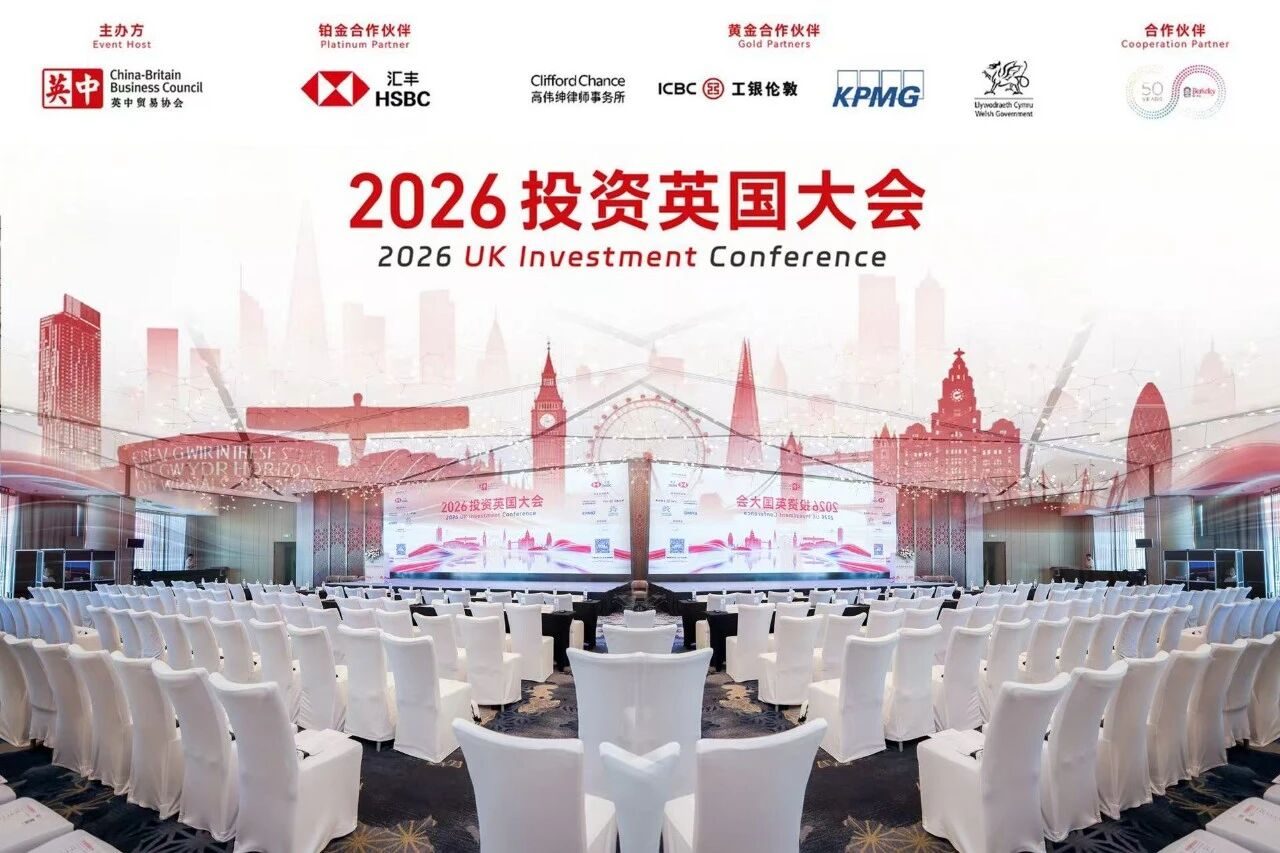
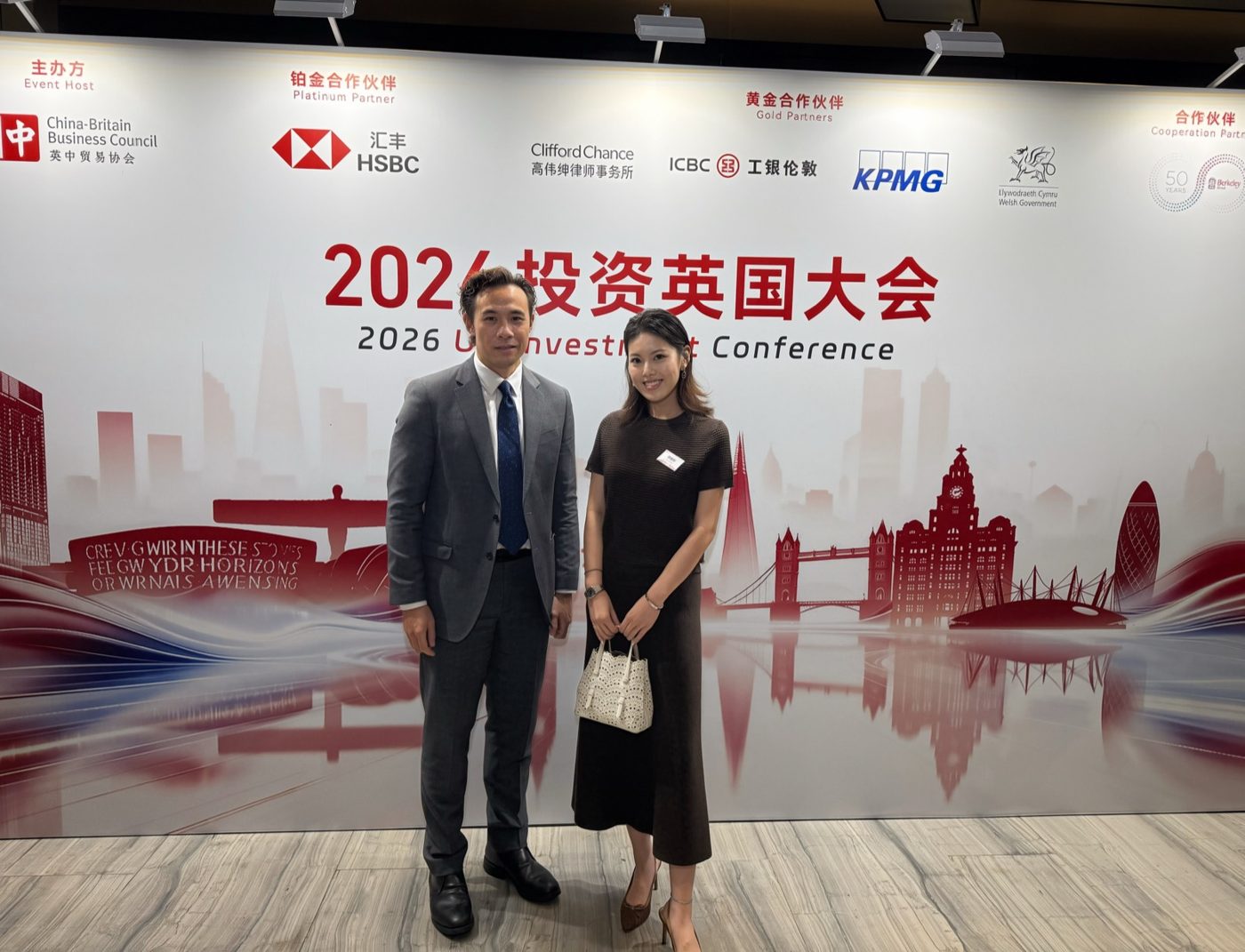
The session I had come for was at half past eleven: "Building a comprehensive entry plan for the UK". Five panellists, about thirty minutes, moderated by Kiran Patel of the CBBC. He had one question and he put it to almost everyone in turn. What do Chinese companies underestimate?
I took notes throughout, and I have been back through them twice since. The four answers I have in full came from a banker, a lawyer, a tax partner and the London Stock Exchange. Banking, law, tax and listing sound like four different subjects. By the end I thought all four were making the same point.
The bank account
Alice Du runs corporate banking for East China at HSBC and used to sit on the bank's China desk in London. She said her list of underestimated things was very long, and then she chose the smallest item on it. Do not underestimate how long it takes to open a bank account in Britain.
In China, she said, it is a few taps on a screen and the account is open the same day. Chinese clients arrive in London expecting the same. Lesson one is that you make an appointment. You do not walk into a branch on the high street and walk out with an account.
Lesson two is the one I wrote down as she said it. When you sit across from the bank, she said, you realise: "Oh, I'm not that famous here in this country." They do not know you. They do not know your business or where you come from. So they ask. Your shareholding structure. Your business rationale. Why you are in the UK at all. Whether your model is going to work here.
She said clients tell her this creates anxiety, and sometimes real doubt about whether Britain is the right place. Her advice was to find an institution that already knows you at home and can vouch for you on the other side, which is what a China desk is for.
Read those questions again, though. Who owns you, why are you here, will this work. Those are not banking questions. They are the questions every British buyer, landlord, distributor and journalist will ask, in that order, for the first two years. The bank just happens to ask them first, and in writing. A company that cannot answer them clearly for a compliance officer will not answer them clearly for a customer either.
"Voluntary" does not mean optional
The Clifford Chance lawyer on the panel took the same question somewhere I did not expect. Parts of the British regulatory system, she said, run on a voluntary basis, and that is unfamiliar to anyone used to China, where you are either required to file or you are not.
Merger control in the UK is voluntary. National security review is mandatory in a list of sensitive sectors and voluntary outside them. And the mistake she sees, often, is a Chinese investor reasoning that voluntary means there is no obligation, so look away. Or, as she put it, better not to poke the bear. Wait, and hope nobody knocks.
Her answer to that was the most useful two minutes of the morning. Voluntary does not mean the risk has gone. The UK runs market monitoring and intelligence gathering, and the agencies talk to each other, so you are on the radar whether you file or not. And if the authority comes to you, you are no longer in the driver's seat. You are answering their questions, on their timetable, about their concerns. If you go to them first, you present the case. You choose the narrative, and you can make it accurate and constructive. British regulators, she said, are open and transparent, but they need to be approached properly.
This is what I tell founders about buyers. If you do not tell your own story first, the buyer makes one up about you, and it is usually worse than the truth. She was saying the same thing about regulators.


Know what you want Britain for
Karen Lin, who leads outbound investment tax at KPMG China, was asked about permanent establishment, transfer pricing and VAT. She said she did not want to make it too complicated for the audience, and kept it simple. Before any tax structure, the chairman has to know what the company wants to use Britain for.
She sees two uses. One is Britain as a platform: for a listing or a second listing, for capital, for acquisitions, for holding the overseas subsidiaries. The other is Britain as a place to operate. On the first, she said UK structures have been used for a long time for a reason. The tax system is transparent and it gives certainty, and certainty is what entrepreneurs and listed groups are actually buying. The main corporation tax rate is 25%, it was 19% a few years ago, and compared like for like across Europe it is competitive. On the second, the incentives are real, R&D credits and investment allowances among them, and HMRC sets them out plainly on its website.
Then the line that mattered. The companies that succeed, she said, are clear about their objective, and when an obstacle comes they solve the obstacle. They do not move the objective.
It is good advice for any founder who is eight weeks into opening a British bank account and starting to wonder whether to give up.
London is not a one-off
Tom Attenborough is Head of International Business Development for Primary Markets at the London Stock Exchange Group. The panel was running out of time when the question reached him, so his answer was short. The exchange is sector agnostic, he said. But he listed what investors come to him asking for more of: technology and tech-enabled businesses, AI included, because listed UK equity is structurally short of tech; fintech and payments; renewables and the green economy; healthcare; consumer; industrial technology. He mentioned a Chinese operating business that listed in London about a month ago at around a billion dollars, which he expects to enter the FTSE 250 later this year.
But his main point was not about sectors. The companies that succeed in London, he said, invest time and effort in a long-term investor relations programme in the UK. They have a genuine desire to internationalise. They do not treat London as a place for a single capital raise and a flight home. They live it, breathe it and grow it.
Sun Libin of ICBC's Shanghai branch had answered first. The point of his that I noted down was his third: start preparing early. It fits with everything the others said.
One answer, four times
The bank wants to know who you are before it opens an account. The regulator is easier to deal with if you introduce yourself first. The tax adviser cannot plan anything until you know what you are in Britain for. The exchange wants companies that will stay and keep talking to investors.
All four were describing a country that does not work on speed. It works on people knowing who you are. In China, a good product and a fast team can outrun the need to explain yourself. In Britain nobody has heard of you, the systems are built on the assumption that they will get to know you first, and none of them can be hurried. Some companies take this as Britain being unwelcoming, and they give up. The ones that accept it as the cost of getting in do get in. And once people there know you, they keep knowing you, which helps you for years.
In the last note I wrote that compliance is branding. After this panel I would go one step further. For a Chinese company in its first year in Britain, the bank's onboarding file, the regulator's first letter and the investor's first meeting are the brand. That is where Britain decides whether it believes you.
Alice Du ended her answer with what her British colleagues say whenever a client complains about the pace. They say it kindly, and a little sarcastically. "Welcome to the UK." Get used to the pace of the country, she said, learn to appreciate it, and one day you will have a success story there.
Sources: 2026 UK Investment Conference, hosted by the China-Britain Business Council, Shanghai, 15 September 2026; panel discussion "Building a comprehensive entry plan for the UK", moderated by Kiran Patel, with Alice Du (HSBC), Karen Lin (KPMG China), Tom Attenborough (London Stock Exchange Group), Sun Libin (ICBC Shanghai Branch) and Clifford Chance, from my own notes; HM Revenue & Customs, corporation tax rates; National Security and Investment Act 2021, notifiable acquisitions; Competition and Markets Authority, mergers guidance
One email a month. What moved, and what it means.
Trade, policy, platform and regulatory changes that affect a brand crossing between Britain and China, in both directions. No pitch, unsubscribe any time.
This note is discussed on LinkedIn, where we reply to every comment. You can also write to us directly.
Reply by email