A founder asked what the government would pay him to go abroad. The former vice foreign minister said his logic was wrong.
At a closed-door lunch in Beijing in June, Le Yucheng told a founder that going abroad does not run on price logic. The UK's new entry rules, and twelve months of trade data, say exactly the same thing.
On 17 June, before the tenth CKGSB Economic Symposium in Beijing, I was at a small, closed-door lunch on Chinese companies going abroad. It was hosted by the Indonesian ambassador to China, H.E. Djauhari Oratmangun, and by Le Yucheng, China's former Vice Minister of Foreign Affairs, who was earlier ambassador to India and to Kazakhstan and later deputy head of the National Radio and Television Administration. The founders in the room made things: components, consumer products, software.
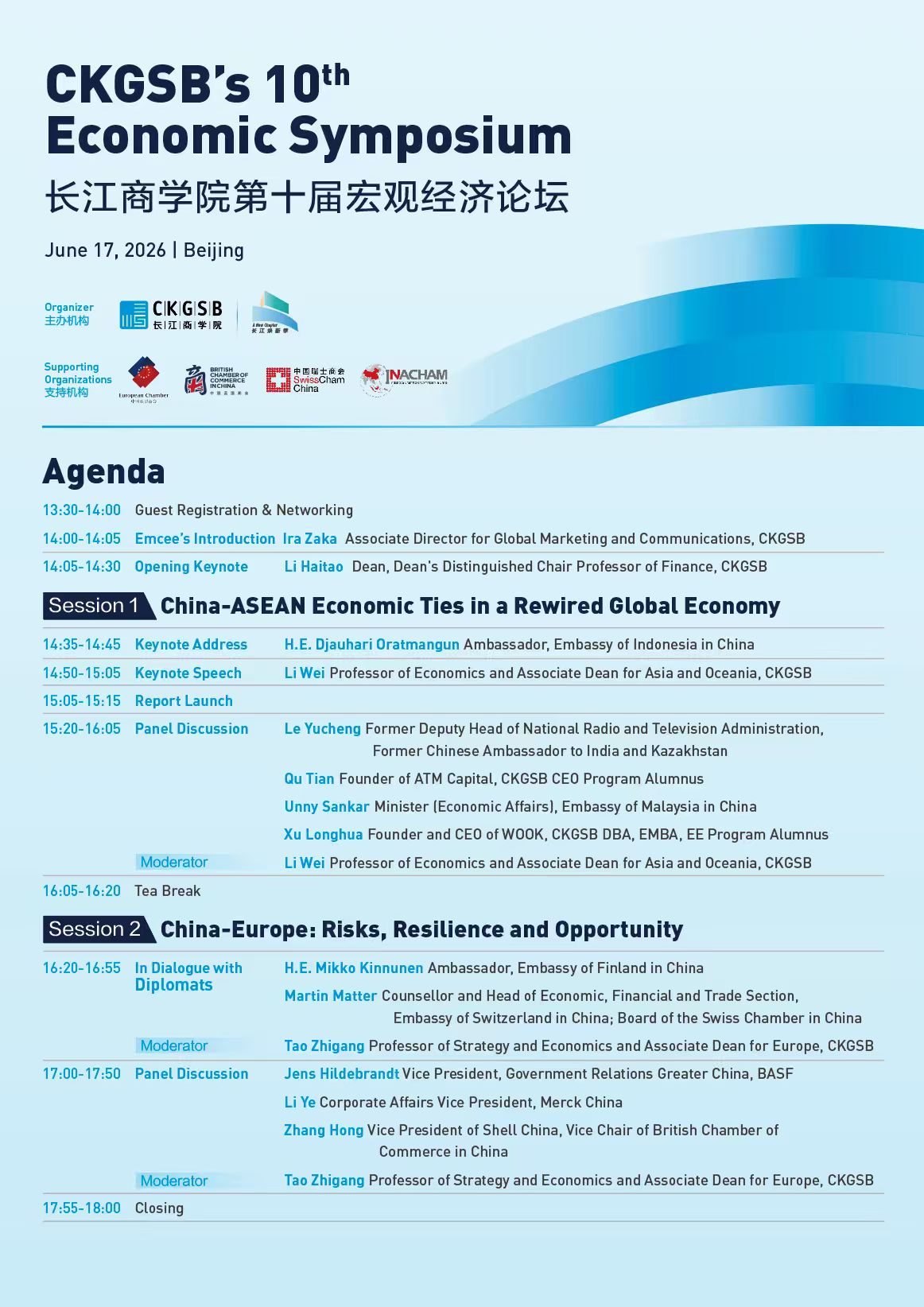
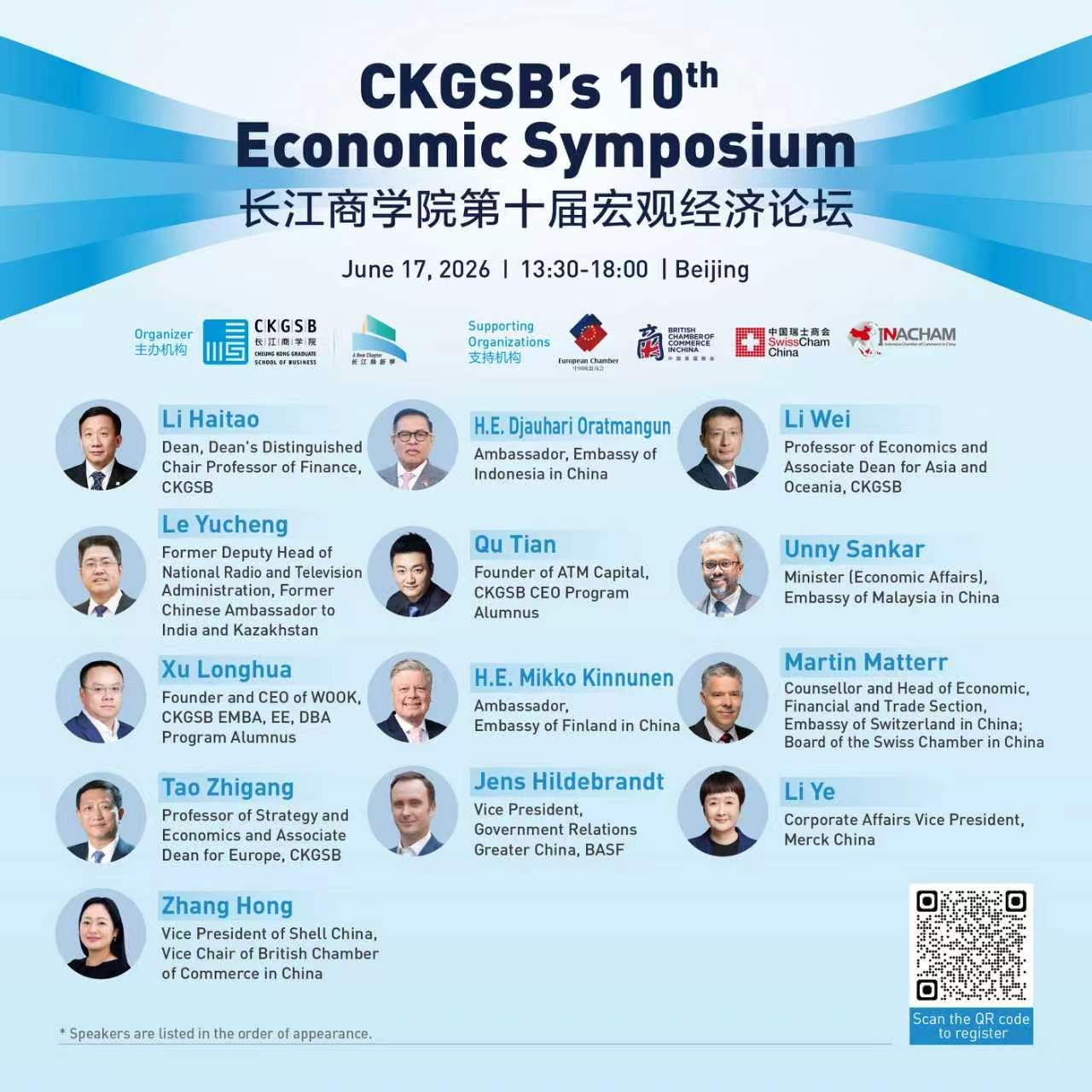

One of them made electric-vehicle parts. Good ones, by the sound of it. He stood up and asked the question every Chinese founder wants answered: what subsidies can the government give companies like mine when we go abroad?
Le Yucheng did not answer the question. He told him the question was wrong.
Le Yucheng's sentence, which I now repeat to every founder
Going abroad, he said, does not run on price logic. It runs on innovation, and on making the other side win too.
Then he explained why, and the explanation is the part that stings. Most Chinese companies go abroad because they are exhausted by the price war at home. Margins are gone, every category has forty competitors, and somewhere overseas there must be a market that will pay properly. So they leave. And they take the price logic with them, because it is the only logic they have ever needed.
The result is predictable once you say it out loud. Abroad, the cheapest Chinese brand in a category is competing with the second-cheapest Chinese brand in that category. On Amazon UK, on a distributor's shelf in Manchester, in a tender in Jakarta, the company that left China to escape Chinese competition finds Chinese competition waiting for it, now with higher shipping costs and no home advantage. A subsidy does not fix that. It pays for the ticket to the same fight in a more expensive city.
The ambassador and the former vice minister said the same thing from two directions. Both emphasised localisation, and they meant something more serious than translation. Respect for religion when you design or redesign a product for a Muslim-majority market. Local customs in the packaging, the colours, the marketing calendar. What people there already believe about your category before you arrive. The ambassador was describing what it takes to be welcome in Indonesia. The former vice minister was describing what it takes to be welcome anywhere.
What happened on the sofa
After the speeches, most of the room did what rooms in China do. They queued to add the minister on WeChat and take a photo with him. My friend and I did not queue. We sat down on the sofa next to him and let him eat.
My friend's Chinese is not strong. He asked where she was from. She said she grew up in Canada. He said Canada is a lovely place, so why was she in China? She said she had come for a fasting retreat on Wudang Mountain, which he found genuinely interesting, and we lost him for a while to another round of photographs.
When he sat back down I said what I had been thinking through the whole lunch. I agreed with him about price logic. But fitting into a market is not only culture, customs and taste. It is also, and equally, compliance and regulation. I was building an AI avatar company at the time, and for my clients in Britain that meant being GDPR-compliant from the first day, moving the cloud to AWS in Europe, and being able to answer a data question in writing before a client asked it.
He agreed, and then he said something in English that I have kept. "Yes, very important, Awa. You should build a 'Made in Europe' brand."
The numbers say the same thing
I did not expect a year of UK–China data to line up behind a lunchtime remark. It does.
At the top, the corridor has re-opened. The UK–China Joint Economic and Trade Commission met in September 2025 for the first time since 2018, and again in London this July, where both sides agreed to accelerate a feasibility study for a trade-in-services agreement. The British Prime Minister went to Beijing in January, the first such visit in eight years. Since 17 February, British passport holders enter China visa-free for thirty days. Bilateral trade reached £105.3bn last year, and in the latest four quarters UK services exports to China grew 7% while goods exports fell. Chinese investment into Europe and the UK rose 67% in 2025 to €16.8bn, most of it new companies being set up on the ground.
At the bottom, Britain has narrowed the gate, and it has narrowed it on exactly the companies Le Yucheng was describing: the ones arriving on price alone.
- Companies House has struck off or suspended 556 company-formation agents. 108 of those suspensions are dated August alone. The agent who sold a "UK company in 24 hours" for the price of a dinner is the product being purged, and when the agent goes, the company's filings stop.
- Every UK company director must verify their identity by 18 November. At the end of June, 55% had. An unverified director will soon read as a warning sign to any buyer who searches the register, and British buyers do search it.
- The £135 relief that let parcels arrive from China duty-free has an end date. The direct-ship, no-footprint model now expires by law.
- Shein, which wanted a London listing, listed in Hong Kong on 1 September at about $26bn, a quarter of its 2022 valuation, after London and New York fell through under political and regulatory scrutiny. A brand built entirely on price logic could not get the city it wanted to believe in it.
And the Chinese companies getting through are not the cheapest ones. BYD has passed 48,000 UK registrations this year, nearly double last year, and Chinese-owned car marques are around 15% of the market by the industry body's own count. They did it with dealers, a warranty network and local pricing, not with a subsidy and a container.
Beijing has noticed too. On 1 September the Ministry of Commerce, the industry ministry and the market regulator issued guidelines telling Chinese carmakers abroad not to disrupt market order for an improper price advantage, to follow local law, and to build after-sales support. The price war is now something the Chinese state is trying to stop at the border.
Open upstairs, tight at the turnstile. Both are true at once. The cheap way in has been priced out; only the credible way remains.
What "Made in Europe" means when nothing is made in Europe
He did not mean factories. He meant that when a British buyer looks at your company, nothing about it should feel like it was designed somewhere else and shipped over. The name is one a British buyer can say and believe. The story is written for that buyer, not translated for them. The company exists properly in that country, with a real registered office, verified directors, an agent who is still on the register, and a bank account that took eight weeks to open. The data sits where the buyer expects it to sit. The claims on the packaging have been checked against the rules before anyone complained.
That is what innovation and shared benefit look like in practice. Not a cheaper product, but a product and a company the other side is comfortable buying from, because everything about it says: we came here to stay, and we did the work.
It is also, in my experience, the part Chinese founders budget for last. The product is ready, the factory is ready, the Amazon listing is ready, and then someone mentions the November deadline for director verification, or the advertising rules on health claims, or what a UK GDPR breach costs, and the plan slips by six months. Compliance is not the boring bit after branding. Compliance is branding. It is the most credible thing a foreign company can say about itself, and from November it is the first thing a British buyer will check.
The line
I have told this story to every founder who has asked me about going abroad since June, and I always end on Le Yucheng's sentence, because it does more work than anything I could add to it.
Going abroad does not run on price logic. It runs on innovation, and on making the other side win too.
If you are leaving China because you do not want to compete on price, do not bring the price with you. Bring something the other side wants to win with. Then make sure that when they check, and they will now check, everything they find says "Made in Europe".
Sources: CKGSB 10th Economic Symposium, Beijing, 17 June 2026; closed-door luncheon hosted by H.E. Djauhari Oratmangun, Ambassador of Indonesia to China, and Le Yucheng, former Vice Minister of Foreign Affairs; DBT UK–China trade and investment factsheet, 31 July 2026; Companies House ceased and suspended ACSP list, 4 September 2026; Companies House identity-verification management information, April–June 2026; HMRC, reforming the customs treatment of low-value imports, 13 July 2026; Rhodium Group and MERICS, Chinese FDI in Europe 2025 update; SMMT, August 2026 registrations; DBT JETCO factsheet, 2 July 2026; Ministry of Foreign Affairs of China, visa-free entry notice, 15 February 2026; MOFCOM, MIIT and SAMR guidelines on orderly overseas development of the automotive industry, 1 September 2026
One email a month. What moved, and what it means.
Trade, policy, platform and regulatory changes that affect a brand crossing between Britain and China, in both directions. No pitch, unsubscribe any time.
This note is discussed on LinkedIn, where we reply to every comment. You can also write to us directly.
Reply by email